
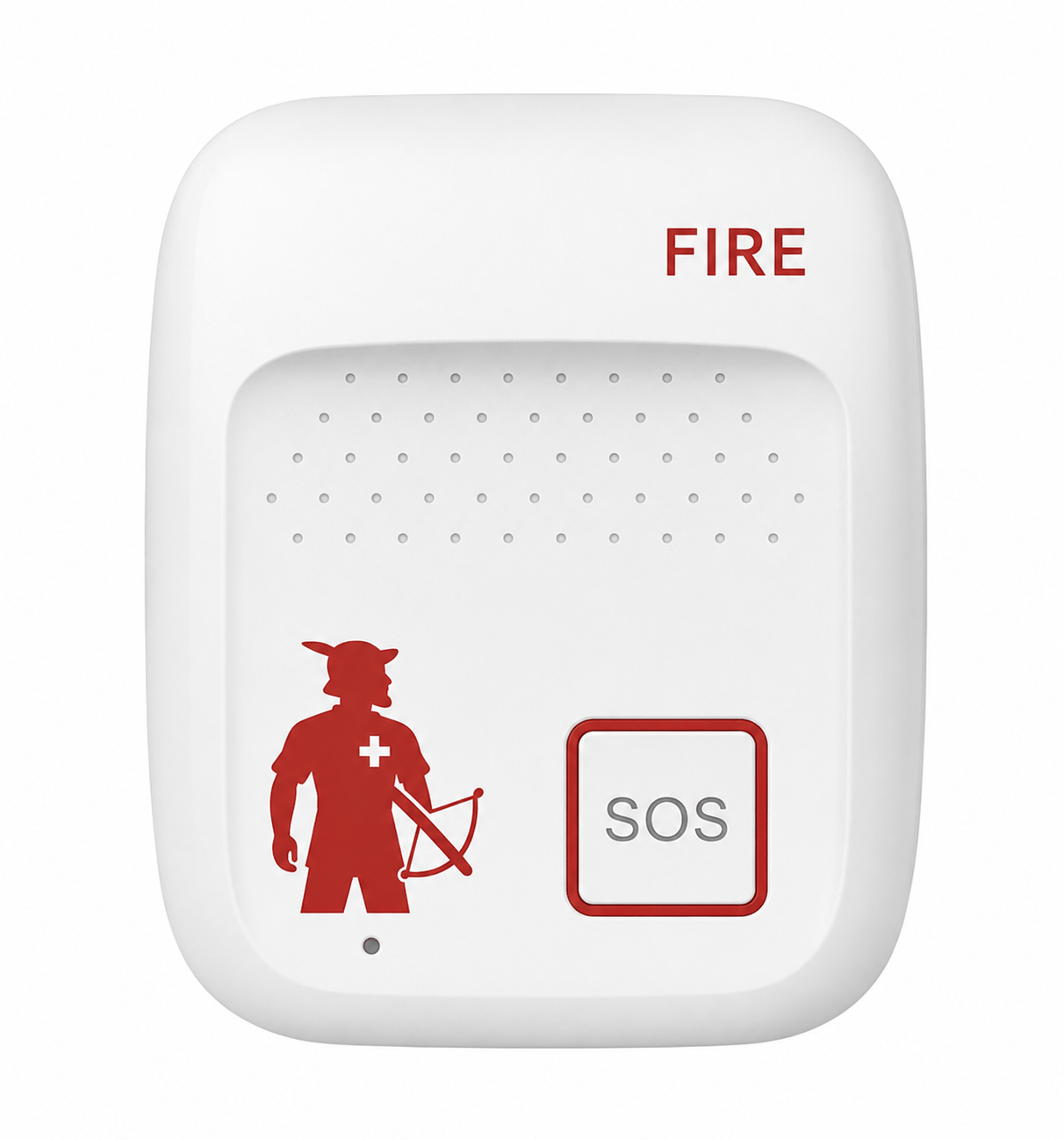
Alarm unit
Tellfire
Wall-mounted SOS unit that starts the alarm sequence.
- SOS button
- 4G/LTE
- Voice connection
- Backup battery
- Wall-mounted
01 · Fire emergency alerts
Press the Tellfire SOS button when you discover smoke or fire. The system activates the building’s warning devices and calls the designated fire service dispatch centre with the alarm location. Depending on the Tellflash version, a warning siren also sounds.
Benefits
A single activation starts the call to the fire service and the warning inside the building. The alarm location is transmitted with the call.
Calls the designated fire service dispatch centre and transmits the alarm location.
Tellflash warns with light and, depending on the version, a warning siren. Mounting locations are planned for your building.
Tellfire and Tellflash communicate by radio. Each device only needs a power connection.
Tellfire is permanently connected to the mains. If the power fails, its integrated backup battery keeps it running for about one day. The connection requires an available mobile network; Tellflash requires mains power.
Sequence
The same activation starts the building warning and the call to the fire service.
0 sAlarm activatedSOS triggered · Room 2.14
A teacher notices smoke and presses the SOS button on the Tellfire.
The system
Tellfire starts the fire service call. Tellflash units provide the building warning. The devices communicate by radio; both are connected to the mains, and Tellfire also has a backup battery. We determine the device numbers and locations during planning.
Alarm unit
Wall-mounted SOS unit that starts the alarm sequence.
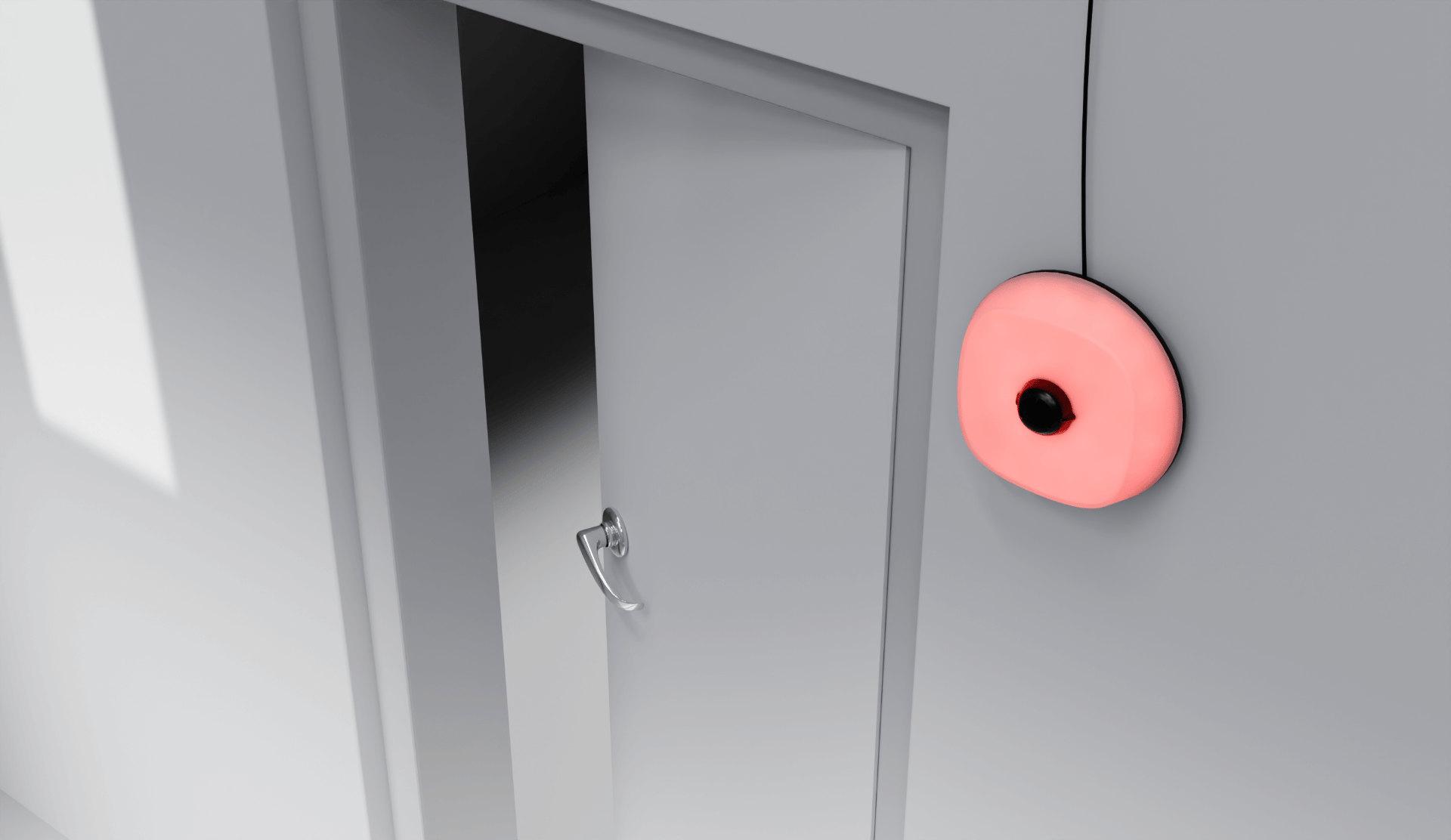
Warning light with optional warning siren
Warning light with an optional warning siren (up to 105 dB), positioned throughout the building.
Planning
We assess the floor plan, number of floors and how each area is used. Tellfire units are placed where staff can reach them; Tellflash units are positioned, for example, in corridors, stairwells and rooms with high noise levels (e.g. workshop, gym, school kitchen).
We set the exact number during the site visit.
Where it is used
A fire warning needs to reach people beyond the room where the alarm is raised. We plan device locations around the layout, occupancy and use of the building.
Clearly marked SOS units let teaching staff raise an alarm from agreed locations.
Administrative buildings and public facilities used by staff and visitors.
Workshops, production halls and warehouses where a spoken warning may be difficult to hear.
Warning devices across multiple floors, planned for the layout and use of the building.
FAQ
Tellfire opens a voice connection to the designated fire service dispatch centre and transmits the alarm location. At the same time, connected Tellflash units activate their warning lights and, where fitted, the warning siren. The defined internal contacts receive a notification (e.g. SMS, WhatsApp, push notification, email).
Tellfire is connected to the mains and bridges a power cut for about one day with its integrated backup battery. It uses the mobile network with a configured backup connection, so its external call still depends on network availability. Tellflash units need mains power, so the full building warning is not independent of the building’s electricity supply.
No data cable is needed between Tellfire and Tellflash: they communicate via LoRaWAN. We check radio coverage during the site assessment. Each Tellflash unit needs a nearby power socket.
No, Tellfon complements it. A fire detection system detects smoke automatically. Tellfon lets the people on site raise the alarm themselves, straight away. We work out with you and your fire safety specialist how the two fit together.
That depends on the size of the building and the number of devices. After the site visit, you receive an itemised quote that includes operation and maintenance.
During a site visit, we review device locations and alarm recipients with you and your fire safety specialist.